Building Scalable Indexers for Solana
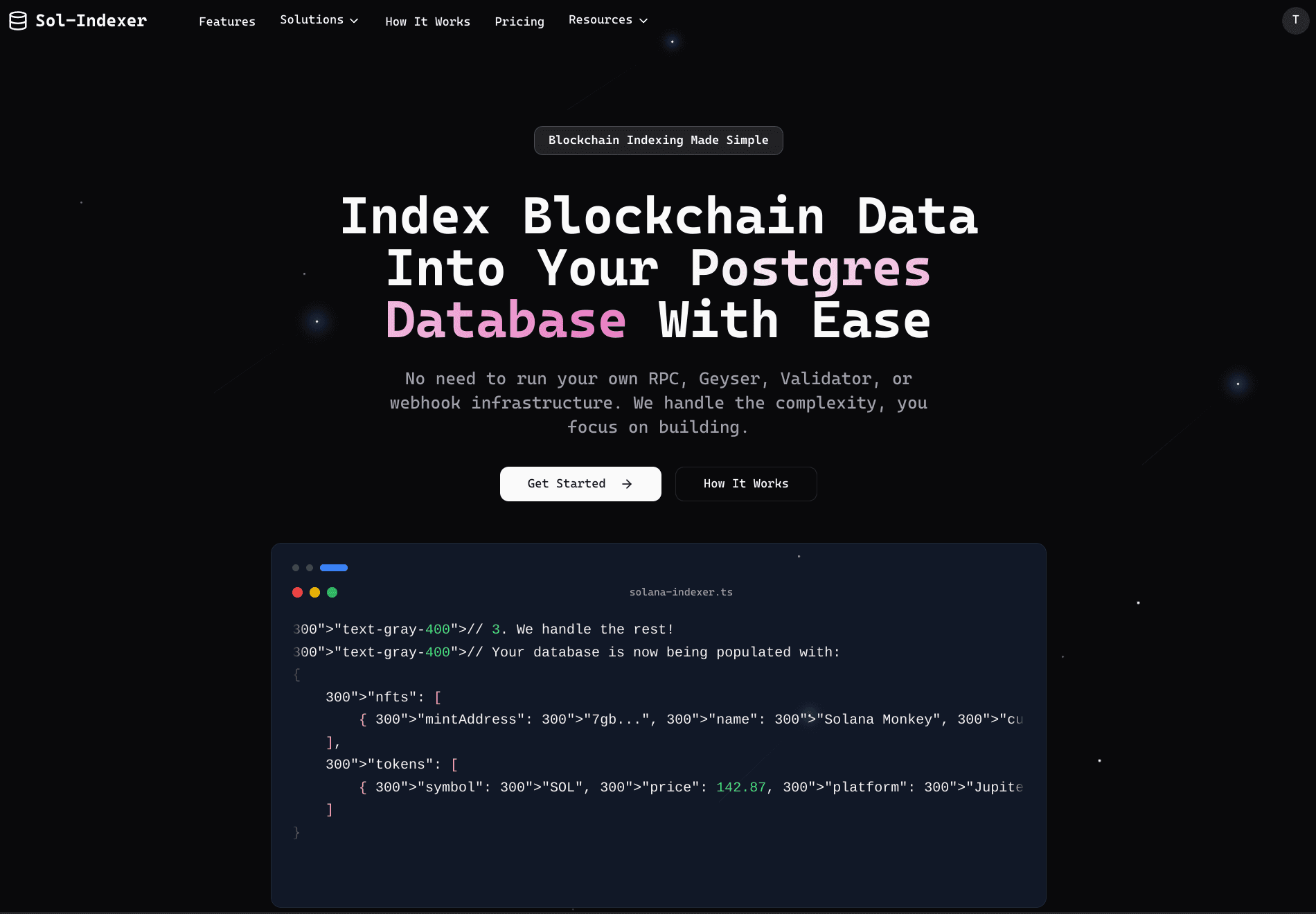
Indexing blockchain data is one of the most challenging aspects of building scalable dApps. In this post, I'll share my journey of building Sol-Indexer, a high-performance Solana indexer.
The Problem
Solana produces a massive amount of data—blocks are produced every 400ms. querying this data in real-time via RPC nodes is often slow and rate-limited. We needed a way to:
- Ingest block data in real-time.
- Filter for specific program interactions.
- Store it in a queryable format (PostgreSQL).
The Architecture
I chose a microservices architecture to ensure scalability:
- Ingestion Service (Rust): Connects to Solana Geyser plugin or RPC to stream blocks.
- Message Queue (Kafka): Decouples ingestion from processing.
- Processor Service (Rust): Consumes events, decodes instructions, and normalizes data.
- Storage Service: Writes processed data to PostgreSQL.
Why Rust?
Rust was the obvious choice for the ingestion and processor services due to its performance and memory safety. The solana-client and solana-sdk crates are also first-class citizens in the ecosystem.
pub async function stream_blocks() -> Result<()> {
    let pubsub_client = PubsubClient::new(&ws_url).await?;
    let (subscription, receiver) = pubsub_client.slot_subscribe().await?;

    // ... handling stream
}
Challenges & Learnings
One of the biggest challenges was handling reorgs. Solana handles forks gracefully, but our indexer needs to be aware when a block is skipped or dropped.
We implemented a "confirmation watcher" service that only commits data to the permanent DB table after it reaches finalized status (32 blocks).
Conclusion
Building Sol-Indexer taught me a lot about system design and the intricacies of the Solana runtime. The project is open source and available on GitHub.